
How to make decisions with ease
Letting go of angst and walking through the fear of getting it wrong

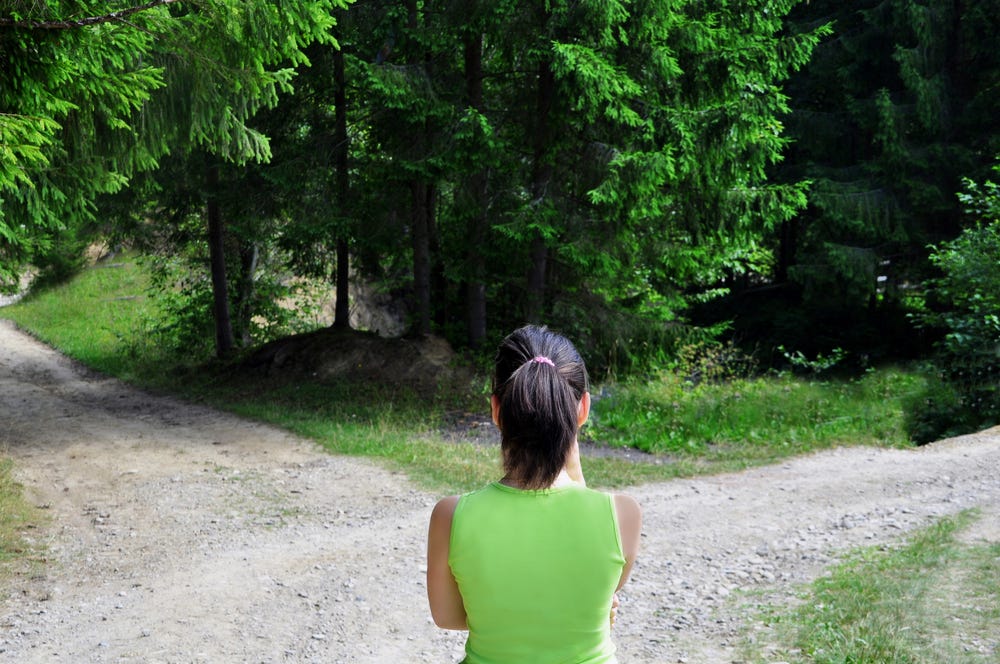
Do you agonise over decisions?
Do you spend ages weighing up the pros and cons, trying to discern the perfect path?
Do you share your thought processes with others, secretly hoping they’ll make up your mind for you?
Then, once you’ve made a decision, do you spiral downwards into self-recrimination, self-doubt and second-guessing?
Or is it just me?
I’m sad to think about the amount of time I’ve spent in analysis paralysis. Cumulatively, I’m pretty sure it amounts to years.
And I’m sad to think about all the things I might have created if I’d spent that time more productively, doing rather than ruminating and obsessing.
I’m also accepting and forgiving of myself, because now I understand the root of my angst around decision-making.
The ‘F’ word
Naturally, it comes down to the ‘F’ word.
It comes down to F.E.A.R.
Otherwise known as …
Flip
Everything
And
Run.
In truth, it comes down to a multitude of fears.
The fear of making a mistake, of getting it wrong, of annoying people, of angering others, of losing something I have or not getting something I want, of being trapped, of not being able to undo what I’ve done.
On top of that, there’s also the fear of success, the fear of breaking free from my own limitations and fulfilling the desires of my heart.
What would happen then?
That’s a scary unknown path while the other road - the one of stuckness, of self-sabotage - is so terribly familiar and, therefore, it feels safe.
Decision momentum
All that said, I have made some momentous decisions in the past ten years.
I moved out of London to the Dorset coast, where I swim in the sea as often as I can.
I bought a home with my then boyfriend.
I said Yes to his marriage proposal.
I married him.
I changed my career.
I wrote and published my book, How to Fall in Love.
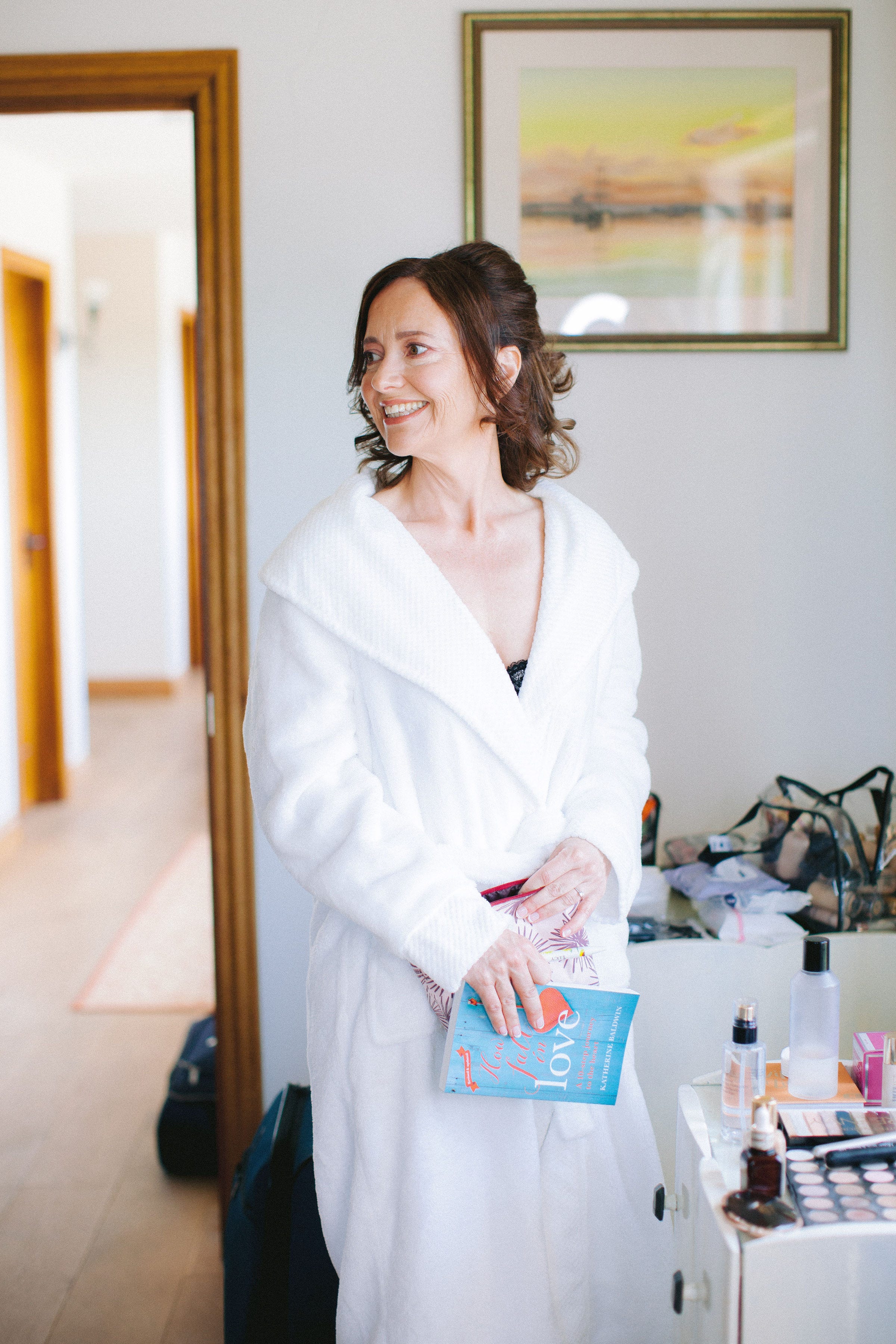
I built a relationship coaching practice from scratch.
I hosted a dozen women’s retreats.
I built a wellbeing speaking business from scratch.
I completed a novel (save for another round or two of edits).
That’s a lot of decisions for someone who’s a decision-phobe (I may have just coined a new term!).
But that momentum has slowed.
Call it Covid and its lingering effects on my health, fitness and nervous system.
Call it peri-menopause and its associated spike in anxiety, dip in energy and drop in confidence.
Call it ageing.
Call it something else.
But the momentum has definitely slowed.
Understanding my decision angst
At the same time, my self-awareness has increased.
I now understand where my anguish over decisions comes from.
I now understand the depths of my developmental trauma.
I now understand the fears I inherited and acquired as a child - the sense that neither the world nor the people in it were safe.
I now understand that I have lived in anticipation of finding danger around every corner and with a nervous system on permanent alert, except for the moments of peace I’ve managed to create thanks to a 20+ year healing journey.
I now understand that I was taught at a young age to ignore my intuition. This happened when I spoke my truth and my truth was denied.
I now understand how much I fear other people’s anger, because I learned to do so as a child.
I now understand that I’m scared of getting stuff wrong because, as a kid, I absorbed the belief that I was wrong and that I had to be perfect in order to be loved.
Self-awareness has its downsides - the scales fall from our eyes and it can be painful to see the truth.
And it has its upsides - armed with knowledge, of our fears, our patterns and our dysfunctional coping mechanisms, we can learn to make healthy decisions and even to make them with relative ease.
Tools to get off the fence

To break free from analysis-paralysis and move forwards, even if we’re scared, we can:
Understand and heal our past wounds and address our fears by bringing our emotional pain to the surface through talking with trusted people, journalling, crying, somatic therapy and so forth
Soothe and reassure our frightened inner child, tell her that she isn’t wrong, that she can’t get it wrong and that she is safe, whatever the outcome of her decision
Calm our nervous system, by breathing deeply, stretching, dipping in cold water, journalling and co-regulating with other human beings who get it and get us
Understand and affirm to ourselves that there is no perfect choice - we can only gather information, make decisions that feel aligned with our intuition and trust that we’ll be OK
Take an inventory of our past choices to affirm that we are capable of making healthy decisions in our best interests - we’ve done it before and we’ll do it again
Accept and forgive ourselves if our choice turns out to be less than ideal and learn from the experience rather than beating ourselves up and using it as evidence that decisions are dangerous and we’re no good at them
In summary, to make decisions with ease, we need to do the opposite of
Flip
Everything
And
Run.
Instead, we need to
Face
Everything
And
Recover.
I know it’s not easy.
I know that sometimes it seems preferable to stay on the fence or run for the hills.
But it’s uncomfortable to sit on the fence for a long time and we can only run so far and so fast before we exhaust ourselves.
The truth is that paralysis is painful.
And it’s depressing to play it small when we know we deserve to go big.
Right, I’m now off to take some of my own medicine, practise what I preach and make some decisions.
I’ll leave you with the following journal prompts. Feel free to share your responses in the comments or by replying directly. It’s always lovely to hear from you.
What decisions are you agonising over today, if any?
How painful is it to stay sitting on the fence?
What obstacles stand in your way? Think about the inner and the outer, the emotional and the practical.
What faulty belief systems are you operating under - about yourself, the world and the people in it?
And what support do you need - both inner and outer - to be able to make a positive choice and move forwards?
I wonder if the time to slow down responses to triggers which might activate decisions is a natural step in growth.Surely maintaining the state of high alert needed to continually make decisions eventually begins to wear us down.I come from a background of being a doctor when the day was made up of constant decision making.When I stopped, I was finally able to see beauty in the world and experience a the wonderful coccooning effect of words.Everyones experience is of course different but I would advocate sitting on the fence a bit and listening to birdsong.
The last question is a hard one when you’re not sure there is an answer to it